A guy from Iowa who makes music, loves Jesus, and refuses to stand by while children go unseen.
Singer, songwriter, producer, foster dad. Music is my voice. Somewhere along the way it became my mission.


It started in a bedroom at fifteen.
My journey with music started when I was 15, experimenting with production in my bedroom and dreaming of one day becoming a full-time artist. That same year I was at a concert I didn’t even pick, and something lit in my heart that has never gone out. I believe that’s how God gives you your calling: a fire that outlasts every doubt.
I went to college for music education. One semester in, my tuition bill matched my bank account exactly, and that was one semester of six. Everyone said stay safe, stay enrolled. But debt wasn’t the way to a calling, so I left. My first album was named after one word, Resolute: never straying from the path, doing what you’re called to do and being who you were made to be. Over the years, God has stretched that dream into something far bigger than I ever imagined.
No, I wasn’t in foster care.
People wonder if I grew up in the system. I didn’t. I grew up in a good Christian home with two loving parents, and I never had serious worries about money. What I struggled with was quieter than that: the need, and the anxiety, to live up to the positive labels I felt people had put on me. The good Christian kid. The perfect child. Well behaved. Quiet.
I ended up working as a youth counselor at a residential treatment facility for children. The kids there carried labels too, just the opposite kind, and it turns out both kinds can crush you. The difference was that those kids did not care one bit what labels I had walked in with. So I put labels down completely, mine and theirs, and I watched them open up.
Two of those kids are the reason this page exists.
The first was twelve. He told me the labels he lived with, and one of them was “unloved.” Everyone around him kept telling him he could just change, flip the switch. He looked at me and said: “It doesn’t work when your lightbulb is broken.” Then he said the thing I have never been able to put down:
“Sure, a lot of people may care about me, but care and love are two different things. I would care if someone hurt a stranger on the street, but that doesn’t mean they were someone I loved. So, yeah, I know people care about me, but I don’t know if I’m actually loved.”
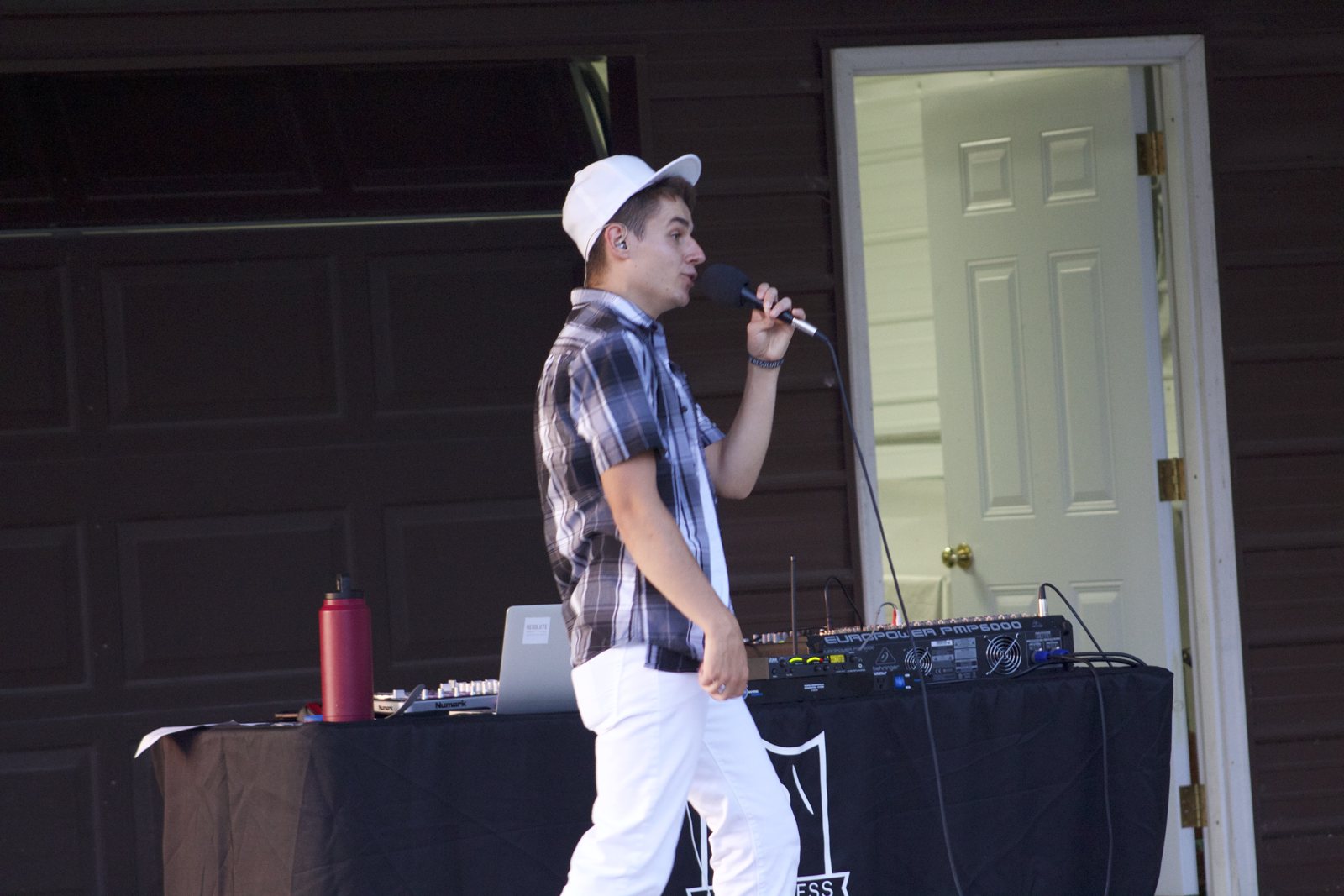
So I paused, and said the words no one ever had: I do love you. A boy who wasn’t comfortable with physical touch, one of his triggers, gave me a hug that lasted two or three minutes and wouldn’t let go. His darkness didn’t change that night. It was still there. It still hurt. But his perspective on his story did. Your story is beautiful, because it’s God that holds the pen. It’s why, when I tell this story on a stage, the next thing I do is sing Beautiful Story.
That moment broke me. It lit a fire in me to do something: to not just make music, but to give a voice to kids like him.
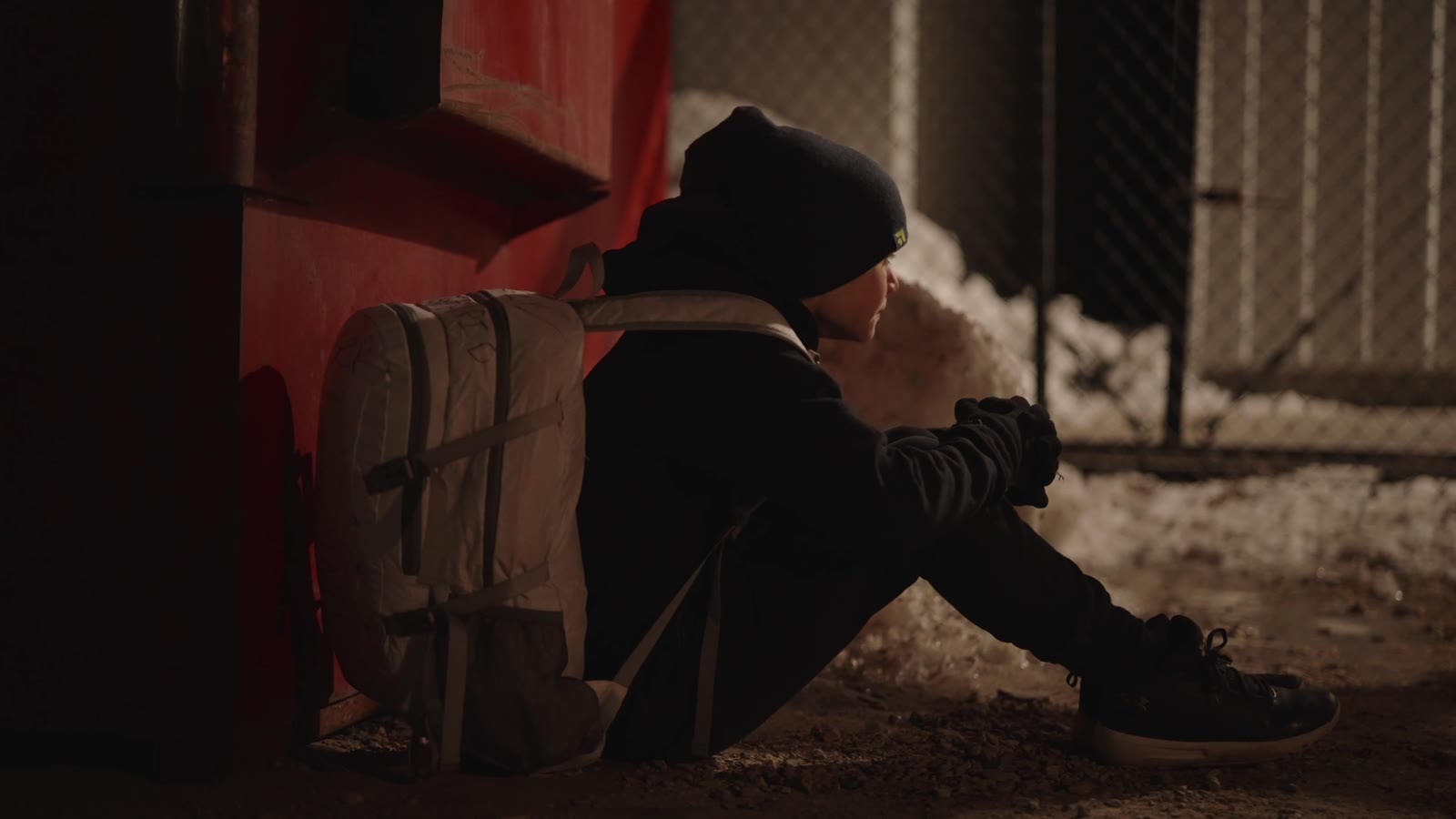
This story doesn’t start the way you’d expect a foster care story to start.
The second was nine, and his story is the one I wrote the ebook about. It starts with a music competition I had prayed to win, and lost. The Saturday I should have been on that stage in San Antonio, I was on my knees at a men’s Bible study I wasn’t in the mood for, and I felt God ask me to pray that He’d bring someone struggling into my life. That same night, work texted asking if I could cover the younger kids’ dorm.
On the dorm, there was a nine-year-old in black and red Nike. While we cleaned a bathroom he told me, the same way I’d tell someone I had two older brothers, that his mom was dead and his dad was in jail. By the time I drove home I felt a tug I couldn’t push away. I prayed. I brought it to my mentors. I woke up shaking from a dream. And I heard God ask: what else do you need?
I started the process to become his foster parent. Months later, an email: he’d been placed with another family. That night I drove to my church, dark and empty, and cried out at the altar until there were no tears left. Then I lay down on the floor and fell asleep. I finished the process anyway. I got my license, not knowing yet what God was doing with any of it.
I stepped into foster parenting myself, and I’ve seen firsthand the pain, resilience, and longing these kids carry. I couldn’t stay silent. That’s where Home to You was born.


I asked strangers on the internet for $15,000.
To make a music video for kids stuck in foster care, told from inside a foster kid’s head: bouncing home, to home, to home. I went live on TikTok night after night asking people to help. One month later, we hit it.
We filmed it locally, with a professional production team and real actors, and a lot of volunteer help on top of that: supporters who drove in from other states, an eleven-year-old playing a kid who’d been through too many homes, and a small Iowa town that came in as strangers and left as a family.
We premiered it in person, a concert, the story, and the first screening, and the night raised $1,000 for a foster-care organization in Iowa. Now foster organizations use it to move people to step up. It’s free to them, forever.
The song came true.
The ebook ends with me admitting I didn’t know where God was leading this. Here’s where.
Carter moved in at the end of February 2026, ten years old. Before that he had moved a lot: several homes, several schools, rarely more than a year in one place. Home to You was already out in the world by then, a song about a kid who bounces from house to house and never knows if he gets to stay.
Three weeks after he moved in, he was playing VR for the first time, and I heard him tell somebody in the game, “let me go ask my dad.” He didn’t say it to me. He said it about me. Then the summer happened: Kings Island, Holiday World, a real cockpit, Disney, Universal, SeaWorld. Sixty-some roller coasters for a kid who had ridden zero. Same dad in every photo.
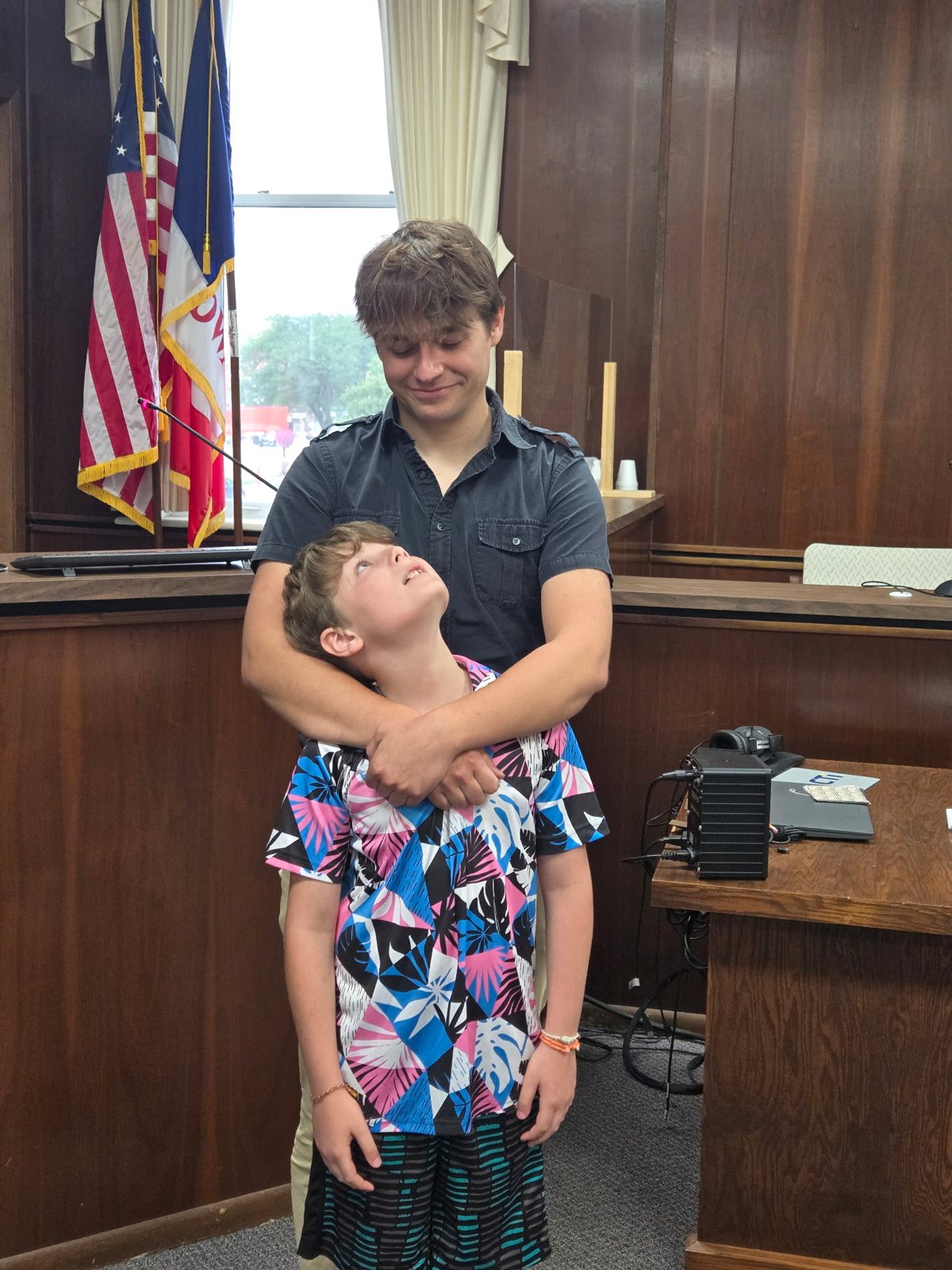
And on September 14, 2026, a judge made it official. Carter sat in the judge’s chair. No more moving. The boy I fostered is my son, and the song I wrote about a kid who never gets to stay is now about a kid who does.
That is the feeling I want for every kid who has ever wondered whether anyone is going to keep them. Not lucky. Not rescued. Home. It’s what everything on this site is for, and it matters more to me now, not less. I want Carter to grow up watching his dad fight for kids like him.
It was never about one kid. It was the door.
One tug on my heart pulled me into foster care, and once I was inside I saw the need up close: the trash bags, the goodbyes, kids who’d stopped believing anyone would stay. The calling grew bigger than one kid. Bigger than me. I wasn’t just meant to foster. I was meant to fight for them.
So there’s the song, and the video, and the ebook, and a free guide for anyone feeling the tug, and a community of foster parents, adoptive families and people who want to help.
The story isn’t over.


Yes, darkness exists.
I’ve seen it in the eyes of children who’ve endured too much. But I’ve also seen the light of Jesus break through that darkness in ways no one can deny. That’s what my music is about: carrying light into the darkest places, and giving people hope that they’re not forgotten, not unloved, and never beyond redemption.
Through every beat, lyric, and concert, my prayer is that people are moved not only to feel something, but to do something. To open their homes, to open their hearts, and to let God use them.

Because every child deserves to know what home feels like.
Don’t give me money you shouldn’t be giving. If a light costs you groceries, keep the groceries. I mean that.
Every dollar funds the music, the videos, the streams and this community. It never funds my ability to foster.